
GenAI reaches another unexpected corner of #FreeSoftware: the #Hurd
https://lists.gnu.org/archive/html/bug-hurd/2026-02/msg00133.html
Discussion
Loading...

@civodul In this case, the person is fully transparent. How many would not be?
Well, the fact that patches using GenAI are sent means we’ve already lost on the ethical side.
Moreover, sadly, it’s impossible to draw a line on the grounds of ethics for rejecting genAI.
Why? Because (1) it’s impossible to clearly state what means the use of genAI and (2) it’s impossible to know if one contribution follows such non-use of genAI.
A project could ask that contributors pledge to not use genAI but (1) makes such pledge poor and (2) makes such pledge empty – the pledge commits those who believe in. 🙃
On this topic of rejecting genAI contributions, it’s doomed, IMHO.
From a project point of view, the only thing actionable is to communicate about the harms. And communicate again.

@khinsen I think the fight against genAI cannot be done at the level of deciding the acceptation or rejection of a contribution. Instead, we need to clarify the harms about genAI and encourage “should do” without entering in “must not” – as I wrote elsewhere. 😁
Writing down an ethical framework appears to me the good thing; as I wrote in https://simon.tournier.info/posts/2024-11-01-visiting-future-gnu.html This could include AI, for sure!
Like the Emacs-in-Rust thing¹, it’s another pipe dream project with scarce humanpower.
I think these two factors—lack of humanpower and a “big” vision—coupled with the passion for technicalities typical of such projects make them particularly vulnerable to genAI.
Because yes, “we” want SMP support in Mach and it’s not been happening until this contributor achieved something with the help of genAI.
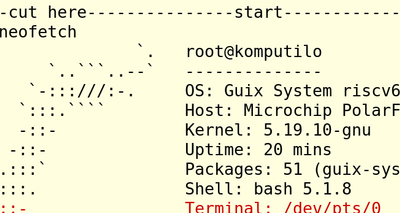
@civodul This is actually a nice example. It is a funny point in time because the providers are unethical, but the tools are interesting. We may go off the cliff, but I don't think it will take very long for free software to catch up with their own decent and improved models. AI is software too. Also we (as free software developers) clearly are invested in our code, so I am not too worried about slop. It may explode, but we will always keep cleaning up.
It’s probably easier for a big project like Gentoo to say “no” to genAI—they have enough contributors anyway, they don’t need it.
So what do we do?
I think we need solidarity. We need to recognize the harms of genAI, including from a free software standpoint.
And we need bigger projects to show the way: to clearly state their rejection, and not on the grounds of quality assurance—a concern bound to become irrelevant—but really on the grounds of ethics, refusing to be part of the harm this does to society.
So yes, maybe we’ll have to give up on some dreams—like the year of the Hurd on the desktop.
But in exchange, we’ll get something more valuable: human beings sharing their passion, helping each other, and building things together. The real asset of free software.